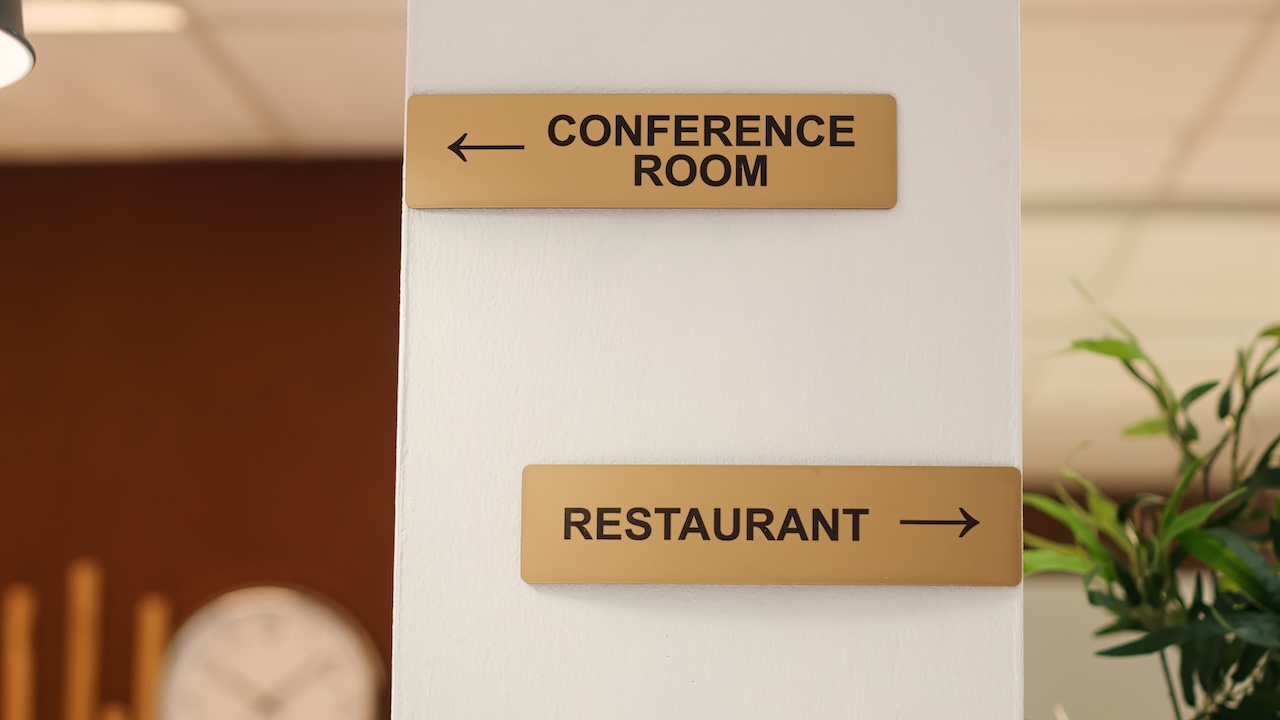
Quick Answer: Wayfinding signs create an improved visitor experience by providing clear directions, reducing confusion, and increasing overall satisfaction.
Have you ever shown up late to an important meeting because you couldn’t find the right room? Or rushed through an unfamiliar corridor to find a restroom? What about attempting to find a loved one in a new hospital or care facility? And that’s just the experience from the visitors’ side.
You also need to take into account that constantly giving directions pulls your staff away from their jobs, interrupting their flow and causing delays. Custom wayfinding signs solve this problem by guiding people through your space with clarity and confidence.
In this blog, we’ll break down what wayfinding signage actually is, how it improves the visitor experience, and what separates a good wayfinding sign from a confusing one.
What Are Wayfinding Signs?
Wayfinding signs are designed to guide people through a physical space. They aren’t the same as a logo sign (that tells people who you are) or a promotional sign (that tells them about a sale or event). Wayfinding signs exist purely to guide movement and reduce confusion.
Custom wayfinding signs essentially answer three questions: Where am I? Where do I need to go? And how do I get there?
Common examples of wayfinding signage include:
- Directional signs with arrows pointing to restrooms, exits, or offices
- Building, floor, or suite directories
- Room identification signs
- Parking and entrance signs
- Elevator and stairway signs
- Campus maps showing “you are here” locations
Custom Wayfinding Signs: The Visitors’ Friend
When visiting a new space, visitors can often feel anxious or stressed. Custom wayfinding signs improve the visitor experience by helping people find their destination quickly.
Here’s how this plays out in practice.
Faster Navigation to the Right Destination
Nobody wants to wander around a hospital looking for radiology or circle a parking garage searching for the right entrance. Custom wayfinding signs point people in the right direction from the moment they arrive.
Consistency Makes Complex Buildings Easier to Navigate
Large facilities like hospitals, universities, and office campuses often have dozens of hallways and departments. When every sign uses the same terminology, colors, and symbols, visitors build trust in the system and can confidently follow the signage to their destination.
Less Stress, More Confidence
Getting lost creates real anxiety, especially for someone rushing to an appointment. Well-placed custom wayfinding signs reassure visitors that they’re headed the right way, confirming their path at each turn.
Indoor and Outdoor Systems Should Work Together
Think of the route a visitor takes—it usually begins outside the building at the parking lot. Outdoor wayfinding signs should guide people to the correct entrance, then immediately be picked up by the indoor directional and directory signage.
Branding Without Sacrificing Clarity
Custom wayfinding signs give you the option to incorporate your brand colors, fonts, and materials while still prioritizing clear direction. Think of it like a hotel lobby directory that feels like an intentional part of the building’s design.
Fewer Interruptions for Staff
Every time an employee stops to give directions, that’s time taken away from their actual job. Clear custom wayfinding signs reduce these interruptions, letting your team focus on their work.
What Makes a Good Wayfinding Sign?
Wayfinding signs should be easy to read, simple to understand, and placed exactly where a visitor needs them.
Make sure your custom wayfinding signs include:
- Clear, concise wording that avoids jargon
- Recognizable arrows and universal symbols
- Visibility from the expected viewing distance
- Strong contrast between text and background
- Consistent terminology across every sign in the building
- Placement at decision points, like hallway intersections
- Durable materials suited to indoor or outdoor conditions
If your building requires ADA-compliant signage, mounting height and placement also matter.
Wayfinding Signage Mistakes
A confusing sign doesn’t help anyone.
Confusing signage can be caused by:
- Too few signs, or signs placed after a visitor has already made the wrong turn
- Inconsistent arrows, colors, or naming between signs
- Text that’s too small, or poor contrast that’s hard to read
- Too much information on a single sign
- Missing confirmation signs that reassure visitors they’re on the right path
Thankfully, confusing custom wayfinding signs can be avoided when you get guidance from the signage experts at Landmark Sign.
Frequently Asked Questions
Where should wayfinding signs be placed in a building?
Custom wayfinding signs work best at decision points, such as hallway intersections, entrances, and elevator lobbies, where visitors need to choose a direction.
How many wayfinding signs does a business need?
This depends on your building’s size and layout. A small office may need a handful of signs, while a large hospital or campus may need a full system spanning multiple buildings.
What’s the difference between wayfinding signs and directional signs?
Directional signs are one type of wayfinding sign. Wayfinding is the broader system, including directories, maps, and room identification signs, that work together to guide visitors.
Can wayfinding signs match our existing branding?
Yes. Custom wayfinding signs can incorporate your brand colors, fonts, and materials while still following best practices for clarity and accessibility.
Easily Guide Your Visitors to Their Destinations
Easier navigation for your visitors. Fewer interruptions for your staff. An opportunity to showcase your brand on every corner. Custom wayfinding signs bring clarity and confidence to every step.
At Landmark Sign, we can create wayfinding signs that represent your brand and effectively direct visitors to their destinations.
Reach out to Landmark Sign to get started.