Quick Answer: Mounting height is just as important as sign design for braille signage. Learn the requirements your custom braille signage must meet to be compliant.
You’ve just signed off on a custom braille sign. It looks good. You’re ready to get it mounted, and then you’ll be good to go. You pick a spot that looks like it’ll work and sign it off. Next thing you know, you’ve failed an ADA inspection. So what happened?
Poor placement can trigger inspection failures and even create accessibility barriers for the very people the sign is meant to help. So, to prevent re-hanging your sign and adding cost and delay to your project, take a moment to review the requirements for mounting heights and clearances.
We’ve put together this guide to break down how to mount custom braille signs correctly, from height to clearance to door placement. Let’s get started.
What Is the Correct ADA Mounting Height for a Braille Sign?
The ADA requires tactile characters on braille signs to be mounted between 48 and 60 inches above the finished floor. What you might not know is that this measurement applies to the tactile characters themselves, not the top or bottom edge of the sign panel.
That means:
- 48-inch minimum: Measured from the baseline of the lowest tactile character
- 60-inch maximum: Measured from the baseline of the highest tactile character
For example: If your sign has two lines of tactile text, the bottom line’s baseline must sit at or above 48 inches, and the top line’s baseline must sit at or below 60 inches. The position of the sign panel itself is secondary.
Will Sign Size and Text Length Affect My Placement?
Yes. Custom braille signs come in different shapes and sizes. When a sign has longer text or multiple lines, the characters shift away from the sign’s edges. This means the visual center of your sign panel may not align with the required character height range.
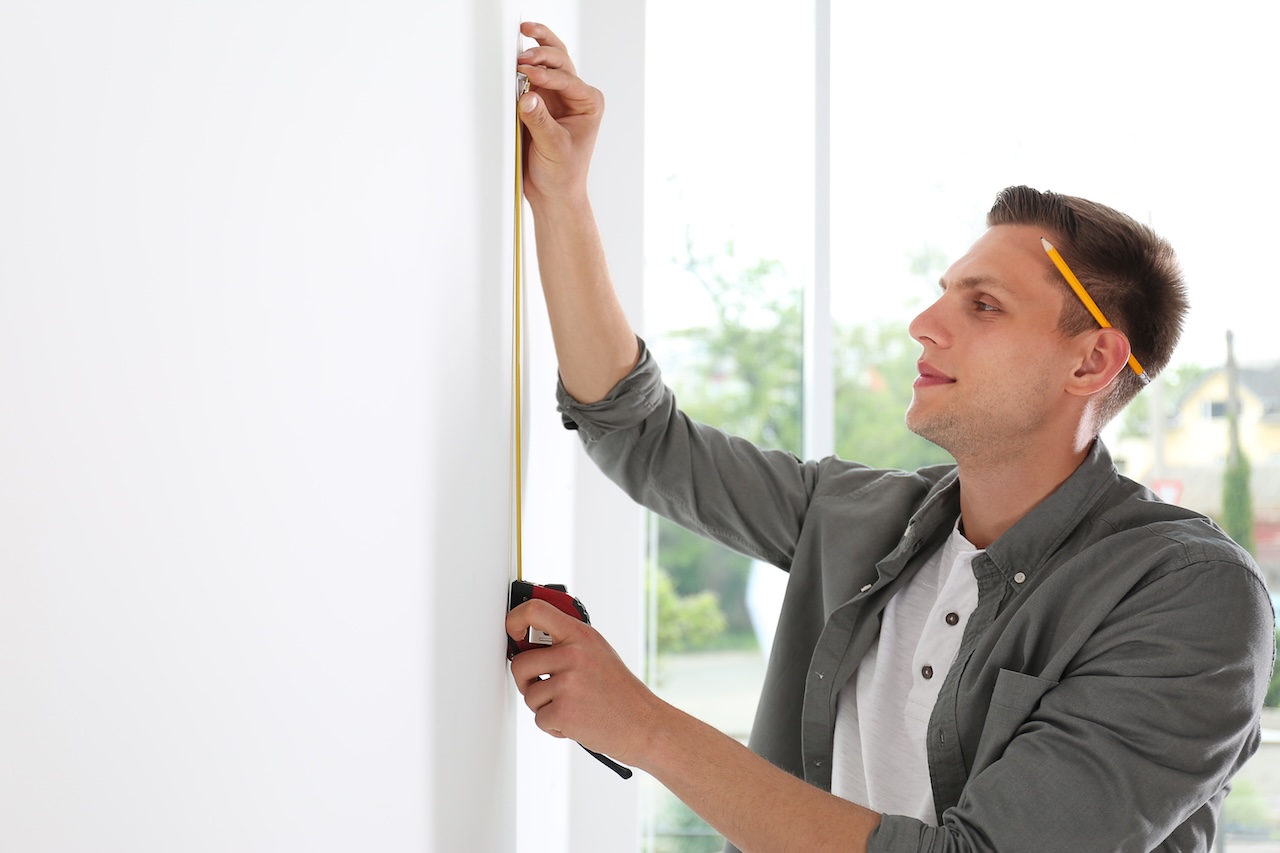
Before visually centering any sign on the wall, installers must first calculate where the tactile characters land. Measure the character baseline and confirm it falls within the 48-to-60-inch range. Only then should you mount the sign.
Where Should a Braille Sign Be Mounted Next to a Door?
Your door configuration can completely change the requirements for mounting your braille signage. When you think about it, this makes total sense. If you’re using a door pull, you wouldn’t want your braille sign too close to the handle. It would be hard for someone to read and even more challenging for a blind person to use.
Here are the basic guidelines for mounting braille signs near doors:
- Single doors: Mount the sign on the wall at the latch side. That’s the side opposite the hinges, where the handle and lock sit.
- Double doors with one active leaf: Place the sign on the inactive leaf. The inactive leaf is the door panel that stays closed during normal use.
- Double doors with two active leaves: Mount the sign to the right of the right-hand door.
Not enough wall space? Move the sign to the nearest adjacent wall.
Always evaluate the doorway before fabrication begins. Retrofitting custom braille signs after installation is a much more complicated process.
How Much Clear Space Does Someone Need in Front of a Braille Sign?
This goes without saying, but there should never be any obstruction—like a potted plant or a desk—in front of a braille sign. The ADA requires a minimum clear floor space of 18 inches by 18 inches, centered on the tactile characters.
Someone reading by touch needs room to reach the sign comfortably and read without having to navigate around a trash can.
Watch for common obstacles that eat into this space, such as:
- Furniture
- Trash cans
- Planters
- Product displays
- Equipment
- Other wall-mounted features
If you need to reach over, peer through, or move something out of the way to reach the sign, then it will not be able to safely convey the information it needs to.
Does Door Swing Affect Braille Sign Placement?
Yes, it absolutely does. A swinging door can be a hazard, especially when it comes to Braille sign placement.
The required clear floor space must sit beyond the door’s swing, measured from the closed position to a 45-degree open position.
This ensures that individuals with visual impairments can easily locate and read the sign without having to navigate around a potentially hazardous moving object.
There is one notable exception: push-side signs are allowed on doors that have closers and no hold-open device.
Can You Mount a Braille Sign Directly on the Door?
For single doors, wall placement is the standard. This keeps custom Braille signs accessible and safe, since the sign’s position stays fixed regardless of whether the door is open or closed.
The one exception applies to double doors with an inactive leaf. In that scenario, the inactive leaf itself may serve as a mounting surface.
Custom Sizes, Shapes, and Branded Braille Signs
Custom braille signs can be visually appealing too—they just need to follow ADA requirements. It’s usually still possible to incorporate your brand colors, unique shapes, and specific materials while staying fully compliant.
Mounting requirements should be part of the design conversation from day one. Take the ADA details into account, regardless of your design choices. Contrast between text and background matters for visibility. A non-glare finish helps in all lighting conditions. Tactile lettering needs to meet size and spacing standards.
At Landmark Sign, our signage experts can help you create custom ADA-compliant signs that meet regulations while still reflecting your brand’s unique identity.
Frequently Asked Questions
Does the ADA mounting height refer to the center of the sign?
No. The 48-inch minimum and 60-inch maximum measurements refer to the baseline of the tactile characters, not the sign’s center point.
Where should you place tactile signs on doorways without doors?
The ADA doesn’t specify an exact location, but signs should sit close to the doorway. Treat it like a double door with two active leaves: place the sign to the right of the doorway, or on the nearest adjacent wall if space is limited.
Can furniture be placed underneath or in front of an ADA braille sign?
No. Furniture and other obstacles cannot block the required 18-inch by 18-inch clear floor space centered on the tactile characters.
Do restroom signs and room-number signs have the same mounting-height requirements?
Yes. Both are considered permanent room designations, so both must follow the same 48-to-60-inch tactile character height rule.
Do custom-shaped ADA signs have different mounting rules?
No. Regardless of shape or size, the tactile character placement must still fall within the 48-to-60-inch range, with the same clearance and door placement rules applying.
Mount Your Custom Braille Signs With Confidence
Mounting height and clearance rules exist to make braille signs functional and fully accessible.
Working with a sign partner who understands these standards inside and out takes the guesswork out of mounting your custom braille signs.
Reach out to our signage experts at Landmark Sign for professional guidance from design through installation.